
Roof access can look simple from the ground, but even a short climb creates serious risks. Sloped surfaces, loose roofing materials, hidden weak spots, ladders, electrical lines, and changing weather can turn a routine inspection into an injury.
For homeowners in Glens Falls, NY, seasonal conditions deserve extra attention. Snow, ice, spring moisture, wind, and wet leaves can make roofs and ladders unexpectedly slippery. The safest approach is to limit roof access, plan the task carefully, and avoid climbing when conditions are uncertain.
Do homeowners need to climb onto the roof?
Usually, no. Many routine checks can be completed safely from the ground, from an upper window, or with binoculars. A roof inspection does not require walking across shingles to identify every concern.
From ground level, look for:
- Missing, curled, cracked, or visibly damaged shingles
- Sagging areas along the roofline
- Loose or damaged flashing around chimneys, vents, and roof edges
- Gutters pulling away from the structure
- Granules collecting below downspouts
- Water stains on exterior walls, ceilings, or attic framing
- Branches or other debris resting on the roof
A ground-level review is not a substitute for a close inspection, but it can reveal many warning signs without exposing someone to fall hazards.
When should a homeowner avoid the roof entirely?
A roof should not be climbed when it is wet, icy, snow-covered, covered with frost, or visibly unstable. Even damp shingles can become slick, especially in shaded areas. Snow may conceal damaged roofing, soft decking, roof edges, or skylights.
Avoid climbing during or immediately after:
- Rain or freezing rain
- Snowfall or thawing conditions
- Strong winds
- Morning frost
- Heavy fog or poor visibility
- Extreme heat, when roofing surfaces can become uncomfortable and slippery
- A storm that may have left loose branches or damaged electrical equipment
In the colder months, snow and ice can also fall from roof edges without warning. Keep people, pets, and vehicles away from areas below active snow buildup or overhanging ice.
How can a ladder be used more safely?
A ladder is often more dangerous than the roof itself because it can shift, slide, or tip before a person reaches the edge. Use a ladder only for tasks that can be completed without stepping onto an unsafe surface.
Before climbing:
- Inspect the rails, rungs, feet, locks, and hinges for damage.
- Choose a ladder rated for the combined weight of the person, clothing, tools, and materials.
- Place it on firm, level ground rather than soil, ice, loose gravel, or stacked objects.
- Keep the base clear of doors, walkways, vehicles, and children.
- Set an extension ladder at approximately a 75-degree angle.
- Secure the ladder so it cannot slide or shift.
- If accessing a roof edge, the ladder should extend well above the landing surface to provide a stable handhold.
- Keep the ladder away from overhead electrical wires.
Climb facing the ladder and maintain three points of contact—two hands and one foot, or two feet and one hand. Do not carry bulky tools while climbing. Use a tool belt, hoist line, or another method that leaves both hands available.
Never place a ladder on top of a deck railing, scaffold, roof, bucket, or other raised surface. Do not stand on the top step of a stepladder, and do not move or “walk” a ladder while standing on it.
What should a homeowner know about roof edges and skylights?
Roof edges are not always easy to see, particularly when viewed from above or when covered by snow, leaves, or debris. A person can misjudge the edge while reaching for a gutter or examining flashing.
Skylights are especially hazardous. Some appear strong but are not designed to support a person’s weight. They may also be hidden by dirt, snow, or roofing materials. Treat every skylight and roof opening as a fall hazard, and never step on or lean against one.
Roof valleys, dormers, porch connections, and areas near chimneys can also collect moisture and debris. These locations may have deteriorated decking beneath roofing materials, even if the surface looks intact.
Is roof walking safe for cleaning gutters or removing debris?
Walking on the roof to clean gutters is generally unnecessary and increases the chance of a fall. Gutter work can often be done from a properly positioned ladder or from ground level using an extension tool, provided the equipment can be used without overreaching.
Do not stretch sideways from a ladder. If the work area is beyond comfortable reach, climb down and reposition the ladder. Overreaching can shift the center of gravity and cause the ladder to slide or tip.
For branches, heavy debris, or storm-damaged materials, avoid pulling from an unstable position. A branch may be under tension, and roofing materials can detach unexpectedly. If wires, structural damage, or large debris are involved, the area should remain clear until the hazard can be managed safely.
What protective equipment is appropriate?
Proper equipment matters, but equipment does not make an unsafe roof safe. Footwear should have clean, slip-resistant soles and should be free of mud, oil, and loose debris. Avoid smooth-soled shoes, slippers, sandals, and worn footwear.
Gloves can improve grip when handling rough materials, but they should not encourage someone to climb beyond their ability. Eye protection is useful when removing debris, cutting materials, or working beneath loose branches.
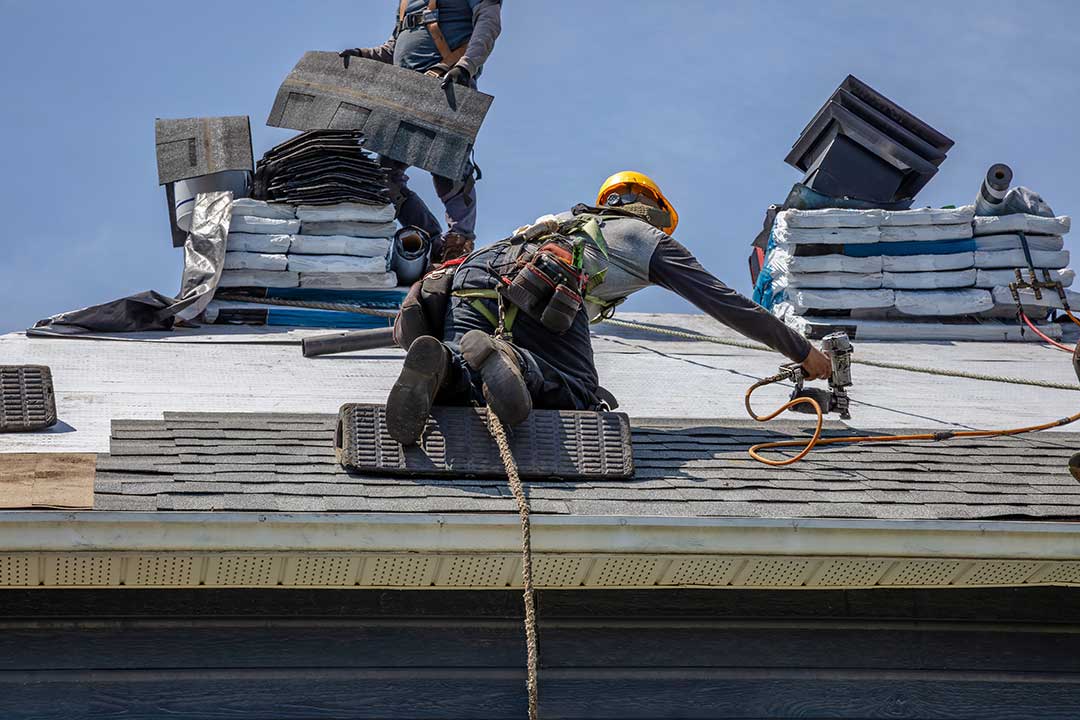
Fall-arrest harnesses and roof anchors require correct selection, installation, inspection, and training. A harness attached to an unsuitable anchor can create a false sense of security. Homeowners should not improvise tie-off points using vents, chimneys, plumbing pipes, gutters, or other components that were not designed for that purpose.
How should roof work be planned around children, pets, and household activity?
Tell everyone in the home when ladder or roof-related work will occur. Keep children and pets away from the ladder base and the drop zone below the work area. Secure doors and gates so that a pet cannot run beneath a ladder or into falling debris.
Do not leave a ladder standing unattended. Even a short interruption can create an opportunity for a child to climb it or for wind to move it. Tools and roofing materials should also be stored where they cannot fall, roll, or become a tripping hazard.
A second adult can help stabilize the area, pass up small tools, monitor changing conditions, and call for assistance if something goes wrong. However, another person cannot replace proper fall protection or make a dangerous task safe.
What should happen after a storm?
After severe wind, heavy snow, or fallen branches, inspect from the ground first. Look for displaced shingles, exposed underlayment, sagging roof sections, damaged gutters, loose flashing, and utility wires.
Do not climb onto a roof that may have structural damage. Stay clear of downed wires and damaged electrical equipment, even if they appear inactive. Water entering near electrical fixtures, a sagging ceiling, or a rapidly growing leak requires immediate attention inside the home while avoiding the affected area.
For many homeowners, the safest roof maintenance is observation from the ground, careful ladder use for limited tasks, and postponing work until surfaces are dry, stable, and clearly visible. If a roof is steep, damaged, difficult to access, or requires specialized fall-protection equipment, climbing it is not a suitable do-it-yourself task.
