
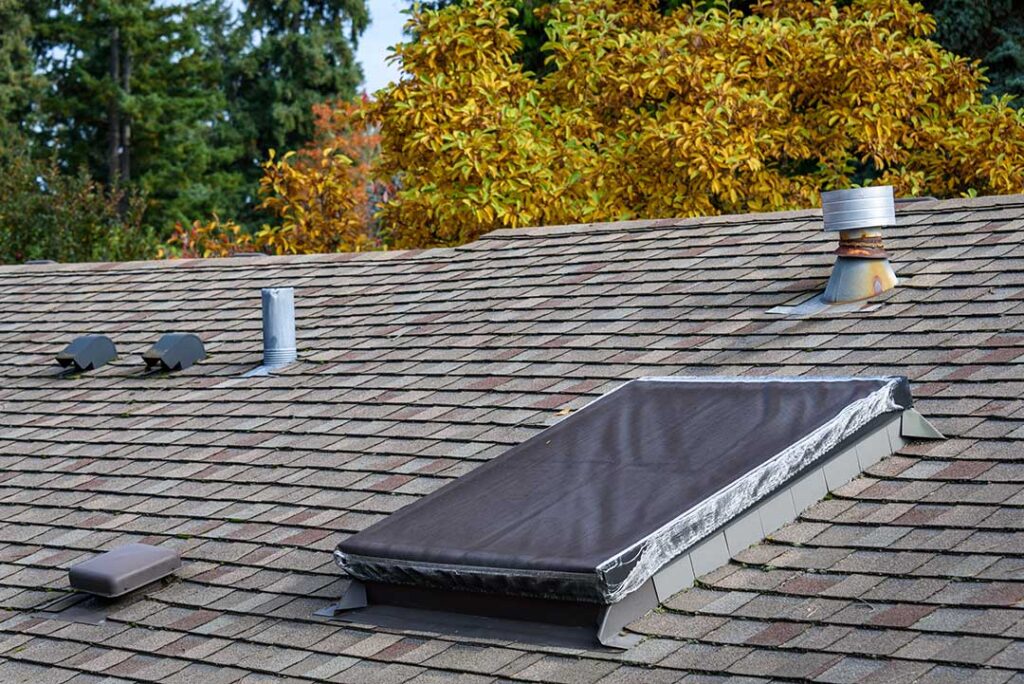
Roof damage can become an emergency quickly, especially during heavy snow, freezing rain, wind, and sudden summer storms. The safest response is to protect people first, limit additional water entry, and document what happened without taking unnecessary risks.
What counts as an emergency roof repair?
An emergency usually involves active water intrusion, a serious opening in the roof, structural damage, or a condition that could worsen rapidly. Missing shingles alone may not always require immediate temporary work, but exposed roof decking or water entering living space does.
Common warning signs include:
- Water dripping through ceilings, walls, light fixtures, or attic insulation
- A section of roof that is visibly sagging
- Large areas of missing or lifted roofing material
- Tree limbs or other debris resting on the roof
- Broken skylights, vents, or flashing
- A ceiling stain that is expanding during rain
- Ice-related damage that allows melting snow into the attic
- Strong wind followed by loose roofing materials around the property
In older housing areas, roof emergencies may involve several layers of roofing, aging sheathing, or additions with different roof slopes. Damage that appears small from the ground can be more extensive underneath.
What should be done first after discovering a leak?
Move people, furniture, electronics, and valuables away from the affected area. If water is near a light fixture, outlet, appliance, or electrical panel, avoid touching wet components and shut off electricity only if the panel can be reached safely from a dry location.
Place containers under drips and use towels to control spreading water. Do not stand beneath a visibly bulging ceiling. A water-filled ceiling can become heavy and may collapse without much warning.
If the roof is damaged after a storm, look for hazards from the ground rather than climbing onto the roof. Downed wires, broken branches, unstable ladders, slippery surfaces, and hidden structural damage make roof access especially dangerous.
Can a homeowner safely make a temporary roof repair?
Some temporary measures are reasonable from the ground or from a stable interior location, but climbing onto a wet, icy, steep, or damaged roof should generally be avoided. Emergency work should reduce water entry without creating a fall or structural hazard.
Depending on the situation, temporary steps may include:
- Covering a small, accessible interior leak with a container and absorbent materials
- Moving stored belongings away from damp areas
- Placing a properly secured tarp over a low-slope, stable section only when it can be installed without roof access hazards
- Clearing water from floors before it reaches additional rooms
- Closing interior doors to limit moisture movement
- Taking photographs and notes before cleanup changes the scene
A tarp that is loosely placed, nailed through damaged shingles, or allowed to collect water can make the problem worse. Temporary coverings should be secured so wind cannot turn them into airborne debris.
Why should snow and ice be handled carefully?
Winter roof problems are common in the region because repeated freezing and thawing can move water beneath shingles and around flashing. Ice dams may form when heat escapes into the attic, melts snow on the upper roof, and refreezes near colder eaves.
Homeowners should not chip ice away with an axe, shovel, or other sharp tool. This can damage shingles, gutters, flashing, and the roof surface. Pouring salt or chemical de-icers onto the roof can also corrode metal components and harm nearby landscaping when runoff reaches the ground.
If snow is unusually deep or a roof begins to sag, stay clear of the affected area and avoid adding weight to the roof. Snow removal from a roof can be hazardous and may require specialized equipment and safety practices.
How can water damage be limited inside the house?
Stopping the visible drip is only part of the response. Water may travel along rafters, insulation, wiring, and ceiling joists before appearing indoors, so the wet area may be larger than the stain suggests.
After addressing immediate safety concerns:
- Photograph ceilings, walls, attic areas, and visible exterior damage.
- Mark the edges of a spreading stain with a pencil and record the time.
- Remove wet insulation or porous materials only when doing so is safe.
- Use fans or dehumidification after active water entry has stopped.
- Keep children and pets away from wet flooring, damaged ceilings, and debris.
- Watch for musty odors, peeling paint, swollen wood, or new stains over the next several days.
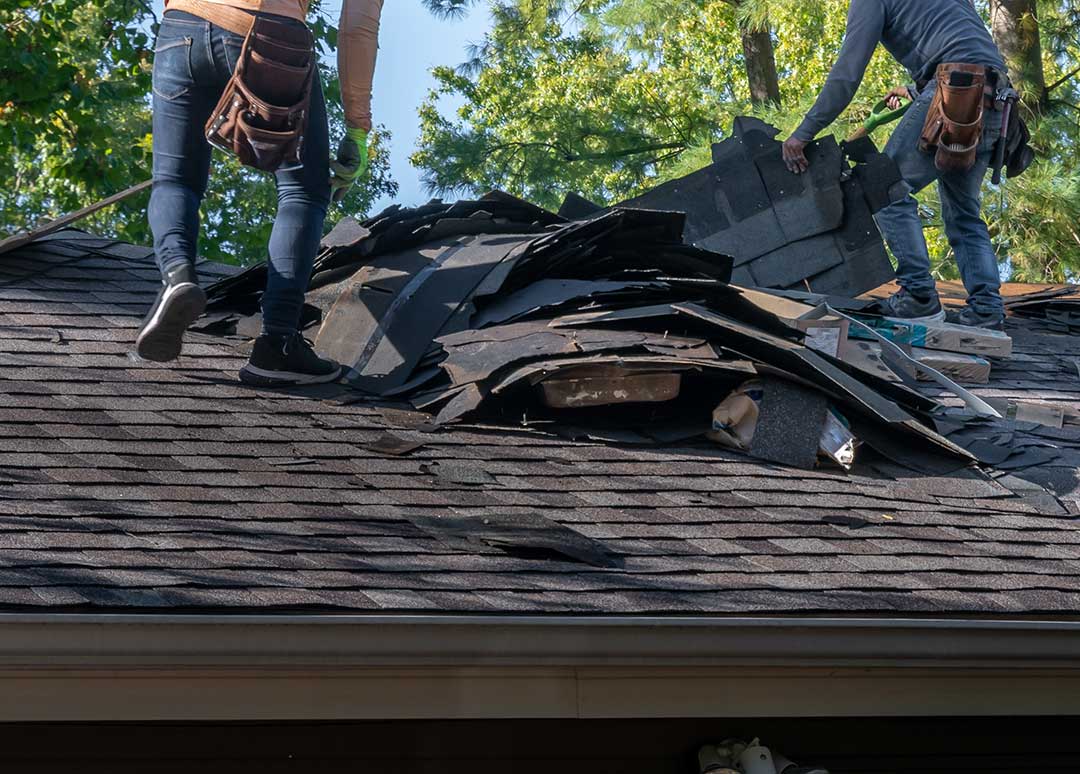
Wet drywall, insulation, and wood can support mold growth if they remain damp. Drying should begin promptly, but electrical equipment and fans must be used safely around moisture.
What information should be documented?
Clear documentation helps distinguish storm damage from older wear and creates a useful record for maintenance or insurance purposes. Photograph the roof from the ground, along with interior damage, fallen limbs, damaged gutters, wet insulation, and loose materials.
Write down:
- The date and approximate time the damage was discovered
- Weather conditions, such as high wind, hail, heavy rain, or rapid thawing
- Which rooms were affected
- Whether the leak continued after the weather changed
- Any temporary steps taken
- Items that were damaged by water
Do not discard damaged materials before they have been photographed unless they create an immediate safety or sanitation problem. Receipts for emergency supplies, cleanup materials, and temporary protective measures may also be useful for household records.
Should a roof be inspected after a storm even if there is no leak?
A roof can have wind-lifted shingles, damaged flashing, or punctures that do not produce an immediate interior leak. Water may not appear until the next rainfall or until snow melts.
A ground-level inspection can identify obvious concerns, including missing shingles, exposed underlayment, displaced vents, bent gutters, and branches resting on the roof. Binoculars can help, but they do not replace a close inspection when damage is suspected.
After severe weather, avoid assuming that a roof is sound simply because the ceiling looks dry. Attic inspection may reveal damp insulation, daylight through the roof deck, or water marks around penetrations.
When is outside help necessary?
Some conditions require trained assistance because the risk involves falls, structural instability, electrical hazards, or hazardous materials. Assistance is especially appropriate when the roof is steep, icy, visibly sagging, partly collapsed, covered with debris, or difficult to access safely.
Immediate help is also warranted when water is entering near electrical wiring, a ceiling is bulging, a large tree has struck the structure, or the damage affects the home’s ability to remain weather-tight.
Emergency roof work is normally temporary. A tarp or patch may prevent additional water entry, but the underlying problem still needs to be evaluated. A proper repair may involve shingles, flashing, roof decking, ventilation, insulation, gutters, or interior finishes.
What can reduce future emergency roof problems?
Routine attention is most useful before severe weather arrives. Keep gutters and downspouts clear, trim branches that overhang the roof, and inspect attic insulation and ventilation for signs of moisture. After major wind or snow events, check the roof from the ground for visible changes.
For homes in Glens Falls, seasonal preparation should account for snow loads, freeze-thaw cycles, wind-driven rain, and ice buildup near eaves. Keeping a flashlight, buckets, plastic sheeting, towels, and a basic camera or phone available can make the first response more organized.
The safest emergency plan is simple: protect occupants, avoid hazardous roof access, control interior water, document the damage, and arrange for a complete evaluation before assuming a temporary fix has solved the problem.
