
Why do gutters matter to the roof?
In Glens Falls, NY, regular gutter cleaning helps keep water, ice, and debris from damaging roofing materials and the roof edge. Gutters are designed to collect runoff from the roof and direct it away from the walls, foundation, landscaping, and entry points around the home.
When gutters are clogged, water does not simply disappear. It may overflow over the front edge, back up beneath the roofing material, collect around the fascia, or drain too close to the foundation. Over time, repeated exposure to moisture can shorten the life of shingles, wood trim, roof decking, and fasteners.
A gutter system cannot protect a roof if water cannot move through it. Cleaning is therefore part of roof maintenance, not just an exterior appearance task.
What happens when gutters become clogged?
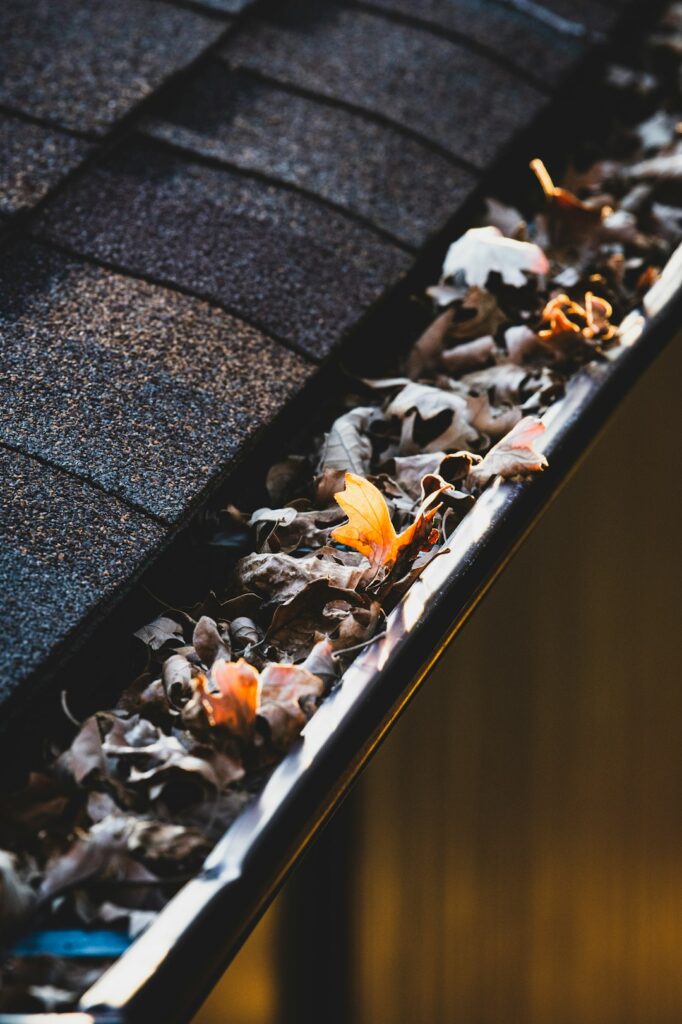
A clogged gutter holds leaves, twigs, seed pods, roofing granules, and damp organic material. That blockage can create several problems at the same time:
- Water may spill over the gutter and run down siding or along the roof edge.
- Wet debris can keep fascia boards and soffits damp for extended periods.
- Overflowing water may seep into joints, trim, or areas around roof penetrations.
- The added weight of saturated debris can pull gutters away from the roofline.
- Blocked downspouts can cause water to collect in sections of gutter rather than drain normally.
Roof damage is not always visible from the ground. A small overflow may occur only during heavy rain, while slow moisture exposure can affect wood and insulation inside the roof assembly. Staining on ceilings, peeling paint near upper walls, musty odors, or damp attic insulation may be signs that water is not being managed correctly.
Can clogged gutters cause roof leaks?
Yes, clogged gutters can contribute to roof leaks, although they are not the only possible cause. Water that backs up at the roof edge can reach areas that are normally protected by the slope and overlap of the roofing materials.
This is especially concerning when shingles are older, lifted, cracked, or already losing their sealing ability. Water may also enter around flashing, chimneys, skylights, vents, or roof-to-wall transitions if drainage problems keep those areas wet.
A roof leak may not appear directly below the gutter. Water can travel along roof decking, rafters, insulation, or wall cavities before becoming visible indoors. That is why an interior stain should not automatically be blamed on the spot directly above it.
Why is gutter cleaning especially useful before winter?
The seasonal change from autumn into winter makes clean gutters particularly valuable for homes in Glens Falls. Leaves often fall over an extended period, and wet debris can become compacted in gutters and downspouts before freezing weather arrives.
During winter, snow on the roof may partially melt during a warmer period and then refreeze as temperatures drop. If gutters and downspouts are blocked, meltwater has fewer escape routes. Ice can accumulate near the roof edge, and repeated freeze-thaw cycles may increase the risk of ice dams.
An ice dam is a ridge of ice that prevents meltwater from draining normally. Water held behind the dam can move beneath roofing materials and enter the attic or upper walls. Cleaning gutters does not eliminate every ice-dam risk, because attic insulation, air leakage, roof temperature, snow cover, and weather patterns also play major roles. However, clear drainage gives meltwater a better chance to leave the roof area.
Gutters should not be treated as the primary cure for ice dams. Poor attic ventilation or inadequate insulation may need attention as well.
How often should gutters be cleaned?
Many homes need gutter cleaning at least twice a year: once in late spring and again after most autumn leaves have fallen. Some properties require more frequent attention if they have mature trees, low-sloped roof sections, nearby branches, or a roof design with valleys that concentrate runoff.
A practical schedule is:
- Inspect in spring for winter damage, packed debris, and separated joints.
- Check during the summer after severe storms or periods of heavy tree shedding.
- Clean in autumn after most leaves have dropped but before repeated freezing.
- Recheck downspouts before winter if the property has experienced overflow.
The right schedule depends more on the property than on the calendar. A home with few trees may remain clear for months, while a home beneath dense branches may clog quickly after one windy storm.
What should be checked during gutter cleaning?
Cleaning should include more than removing visible leaves from the top of the gutter. The entire drainage path should be considered.

Look for:
- Water that pools instead of flowing toward the downspout
- Loose, sagging, or separated gutter sections
- Downspouts that are blocked or disconnected
- Missing end caps or leaking seams
- Rust, holes, or cracks
- Roof granules collecting heavily in the gutter
- Fascia boards that appear soft, stained, or pulled away
- Downspout outlets that discharge too close to the foundation
A small amount of roofing granule loss is common as shingles age, but a sudden increase may deserve closer attention. Granules can also accumulate after roof work or severe weather, so the surrounding circumstances matter.
After cleaning, water should be able to move through the gutter and downspout without spilling over or backing up. Downspouts should direct water far enough away from the foundation to avoid creating persistent wet areas beside the home.
Are gutter guards a replacement for cleaning?
No. Gutter guards may reduce the amount of leaves and larger debris entering a gutter, but they do not make the system maintenance-free. Fine particles, seed material, roof granules, moss, and small debris can still collect on or beneath some guard designs.
Guards can also become difficult to inspect if debris builds up on top of them. Their effectiveness depends on the design, installation condition, roof configuration, and surrounding trees. Even homes with guards should have the gutters and downspouts checked periodically.
The purpose of a guard is to reduce debris entry, not to eliminate the need for roof drainage inspections.
When is gutter cleaning unsafe to do alone?
Gutter cleaning becomes hazardous when it requires working from a steep roof, using a ladder on uneven ground, reaching over fragile surfaces, or handling icy conditions. Wet leaves can also make roof edges and ladders slippery.
Avoid climbing during freezing weather, high winds, thunderstorms, or when the roof surface is wet. Power lines, deteriorated fascia, unstable ladders, and heavy ice add further hazards.
If safe ground-level methods cannot reach the gutters, or if the inspection reveals structural damage, professional assistance may be necessary for safety. Roof edges should never be walked on simply to reach a clogged gutter.
Regular gutter cleaning does not guarantee that a roof will remain leak-free, but it removes a preventable source of moisture, weight, and winter drainage trouble. For local households, a spring inspection and a careful late-autumn cleaning are simple ways to help the roof manage the rain, snow, and freeze-thaw conditions that occur throughout the year.
